

How Drayage Works at PortMiami: Step by Step
From the moment your vessel berths to the moment the empty goes back, here's the full PortMiami drayage workflow — and exactly where the delays and fees tend to hide.
PortMiami — the "Cargo Gateway of the Americas" — moves a huge volume of containers through a compact footprint on Dodge Island. If you're importing through Miami, knowing how a container actually gets from the ship to your dock helps you anticipate delays, budget for fees, and give your carrier what it needs to move fast. Here's the whole flow, step by step.
Step 1 — Vessel arrival and discharge
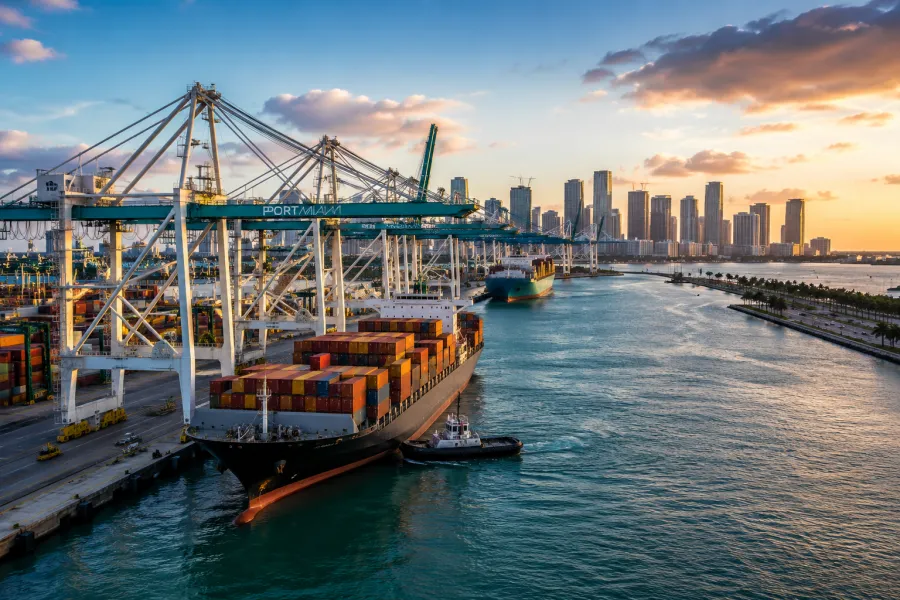
Your container crosses the ocean and the vessel berths at one of PortMiami's marine terminals. Ship-to-shore cranes discharge the containers and stack them in the terminal yard. At this point the box is on the terminal but not yet available to you — it has to be processed and released before anyone can pick it up.
Step 2 — Availability, holds and the free-time clock
Once the container is discharged, cleared and released, it becomes "available." This is the moment the free-time clock starts. The terminal grants a set number of free days; the final one is your last free day. Two things can hold a container here: a customs hold (until CBP releases it) or a line hold (until freight charges are settled). Nothing moves until those clear — so staying ahead of documentation and payment is the first place to prevent delay.
Step 3 — Booking the terminal appointment
PortMiami moves run on appointments. Your drayage carrier books a pickup slot through the terminal's appointment system, matched to chassis availability. Appointment scarcity during busy periods is a real risk — the earlier your carrier has the container number, terminal and last free day, the better the odds of securing a slot before demurrage begins.
Step 4 — Gate in, pull, gate out (TWIC required)
On the appointment, a driver holding a valid TWIC (Transportation Worker Identification Credential) enters the terminal. TWIC is a federal security credential required for unescorted access to secure port areas — no TWIC, no entry. The driver is matched with the correct chassis, the container is loaded onto it, paperwork (the interchange) is processed at the gate, and the driver rolls out through the exit gate with your box.
Everything upstream — customs, appointments, chassis, TWIC — has to line up before a single mile is driven. That's why coordination, not distance, is the hard part of PortMiami drayage.
Step 5 — Delivery to your door
From the terminal, the container heads to its destination across South Florida — Doral, Medley, Hialeah and beyond. Delivery happens one of two ways: a live unload, where the driver waits while you unload, or drop-and-pick, where the container is dropped for you to unload on your own schedule. Which to choose has real cost implications — see drop-and-pick vs live unload to decide.
Step 6 — Empty return
After unloading, the empty container and chassis go back to the terminal or depot. This step is easy to overlook and expensive to botch: hold the equipment too long and per diem accrues. A prompt empty return is the final piece of a clean move.
Where the delays and fees come from
- Demurrage — the container sits on the terminal past the last free day. Prevent it by pulling early or pre-pulling to a yard.
- Per diem — the equipment stays out past free time. Prevent it with fast unloading, transloading or drop-and-pick.
- Chassis splits — the chassis isn't at the terminal, forcing an extra pickup stop. See chassis fees explained.
- Appointment scarcity and congestion — the busiest weeks make slots hard to get.
- Holds — customs or line holds freeze the container until resolved.
For how these turn into line items on a quote, read PortMiami drayage rates explained.
Tips for a smooth PortMiami move
- Send your carrier the container number, terminal and last free day as early as possible.
- Clear customs and settle line charges before the last free day.
- Have your dock ready to work the instant the driver arrives on a live unload.
- Return empties promptly — don't let them sit in your yard.
- Use a carrier based near the port that can grab appointments and turn moves quickly.
OnTrak is a licensed, insured, hazmat-certified drayage carrier based in Doral — minutes from the terminals — with a dedicated PortMiami team and TWIC-holding drivers who manage every step above. Learn more about our PortMiami drayage service and our full container drayage offering, or request a quote to get moving.
Ready to move your freight?
Tell us the container, terminal and lane — OnTrak dispatch responds fast, every time.